
Kinetic Minds Academy
Success stories
Real students. Real results. A look inside.
A note from Daria
Every family that comes to work with me arrives with a story — sometimes frustration, sometimes hope, often both. I’d like to share these experiences because I genuinely believe that seeing what’s possible for other children can be the turning point for yours.
This is a small selection of students I’ve had the privilege of working with. Some were struggling with catching up to educational standards, others with confidence, others wanted to get ahead of the curve and reach for advanced results, and a few just needed someone to meet them where they were.
I hope that in reading these, you find encouragement, a sense of what my tutoring approach is about, and maybe a little of yourself in one of these families.
Daria
Disclosure: To protect students’ privacy, names have been changed or abbreviated. Thank you for understanding.
Student stories
Click any story to read more
Confidence · Creative thinking
Emma
Summer bridge — 5th to 6th grade
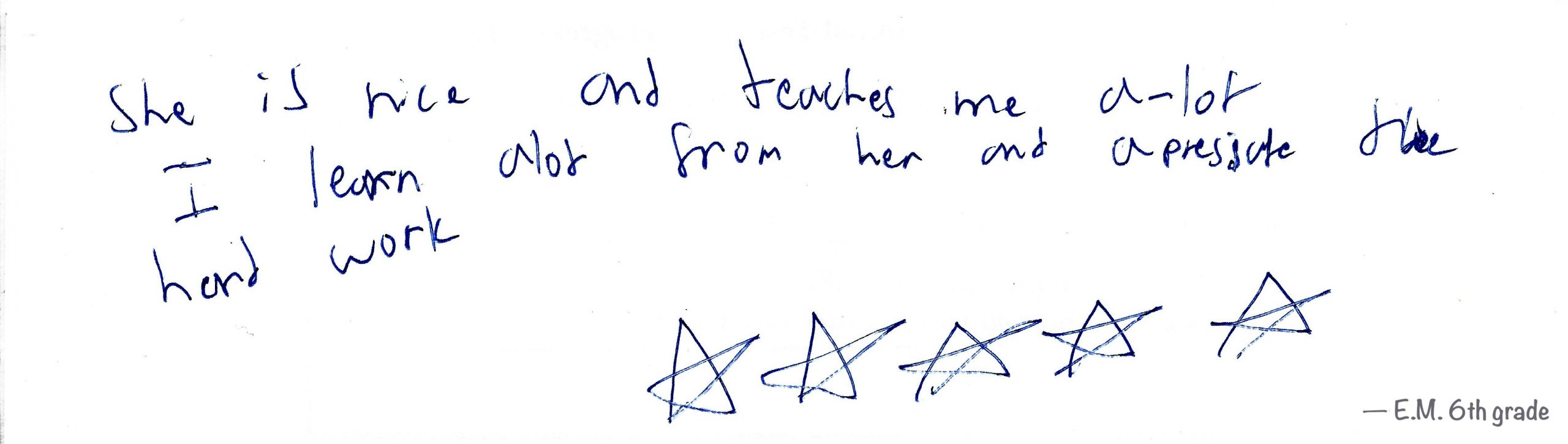
“She really gets one on one with you and she’s really nice, kind and I really mean it. 5 stars for sure :)”
— Emma
↓
Read Emma’s storyWhere she was
Emma was my first private student, and in many ways, she shaped the philosophy I now bring to every session. She came to me during the summer transition between 5th and 6th grade — a pivotal moment where foundational math concepts either click into place or quietly start to unravel. Decimals were one of those concepts that hadn’t fully landed yet.
What we worked on
From the start, I knew I wanted to go beyond just covering the curriculum. I believe that understanding how a student thinks is just as important as what they need to learn. So before I explained anything, I asked Emma to explain it back to me — how did she picture it in her mind? What I discovered wasn’t confusion. It was a different, entirely valid way of visualizing the same concept.
Take dividing a number by 100. For some students, the decimal point moves left. For others, the number itself shifts right. Neither is wrong — they’re just different mental models arriving at the same truth. What looks like a stubborn misunderstanding is often just a perception misalignment. Once we named it, worked with it, and built on it instead of against it, everything opened up.
The turning point
The moment Emma stopped saying “I don’t get it” and started saying “oh, so it’s like…” — that was it. She wasn’t struggling because she lacked ability. She was struggling because no one had yet asked her how she saw it.
The result
Emma finished the summer ready for 6th grade, not just academically but with something more important: the belief that she was capable, that there was nothing wrong with the way her mind worked, and that math could make sense on her terms. This experience confirmed that one-on-one tutoring done with real intentionality — going beyond seeing a student as a client — can make a profound difference.
Independent learning · Test performance
Liam
8th grade — Geometry
“My son is currently having a wonderful experience with Daria. She has a very friendly and approachable nature, which makes my son feel comfortable and confident in asking questions.
One of the most impressive aspects of her teaching is how clearly she explains concepts. My son often shares that topics he struggles to understand in school, even after multiple classes, become much easier to grasp after just a session with her.
Beyond helping with homework, she is very thorough in ensuring that students are well-prepared for tests and finals by revisiting and reinforcing previous lessons. She also goes the extra mile by preparing worksheets for additional practice at home, which has been extremely helpful.
We also truly appreciate her flexibility when it comes to rescheduling classes due to unexpected conflicts—it makes coordinating much easier for our family.
I would definitely recommend her to anyone looking for a Maths tutor who is not only knowledgeable but also friendly, patient, and skilled at understanding a student’s strengths and weaknesses, and tailoring her teaching approach accordingly. “
One of the most impressive aspects of her teaching is how clearly she explains concepts. My son often shares that topics he struggles to understand in school, even after multiple classes, become much easier to grasp after just a session with her.
Beyond helping with homework, she is very thorough in ensuring that students are well-prepared for tests and finals by revisiting and reinforcing previous lessons. She also goes the extra mile by preparing worksheets for additional practice at home, which has been extremely helpful.
We also truly appreciate her flexibility when it comes to rescheduling classes due to unexpected conflicts—it makes coordinating much easier for our family.
I would definitely recommend her to anyone looking for a Maths tutor who is not only knowledgeable but also friendly, patient, and skilled at understanding a student’s strengths and weaknesses, and tailoring her teaching approach accordingly. “
— Liam’s father
↓
Read Liam’s storyWhere he was
Liam was a capable, analytical student — that much was obvious from the first session. Concepts clicked quickly, instruction landed, and my role felt more like nudging than explaining. So why weren’t the test scores reflecting that? The diagnostic showed some gaps, but nothing that explained the disconnect. I wasn’t sure yet, so I started by helping with homework and watching carefully.
The missing piece
In one-on-one sessions, new material was understood almost immediately. But in school, the setting is different. The pace is different. The delivery is different. My working theory: the classroom was calling for a level of independent learning that Liam wasn’t yet fully equipped to navigate on his own. Material is introduced, sample problems are solved, homework is assigned — and students are expected to reconstruct the strategy at home, practice until confident, and show up ready to be tested. When that system doesn’t align with how a student processes things, something from the outside needs to step in.
The shift
I started asking different questions: What do you think has been your Achilles heel? What would be a better strategy for the test? What’s the 20% of effort that delivers 80% of the outcome — and are we doing that? I also wanted to be direct: if a student sees no real benefit in what we’re doing together, we’re better off saving the family’s time and money. The brain doesn’t absorb what it experiences as meaningless. Watching Liam’s answers become more thoughtful and self-aware over time — that was its own kind of result.
The result
Liam scored 94% on his geometry midterm and 99% on his final exam (118/119). Geometry rewards pattern recognition, and he had that in abundance. What we added was something equally important: the comfort to pause before a problem, identify the right approach, apply it, verify it, and try again if needed. A skill that extends well beyond 8th grade math.
94% on geometry midterm
High achiever · Long-term retention
Sophia
7th grade — accelerated Algebra prep
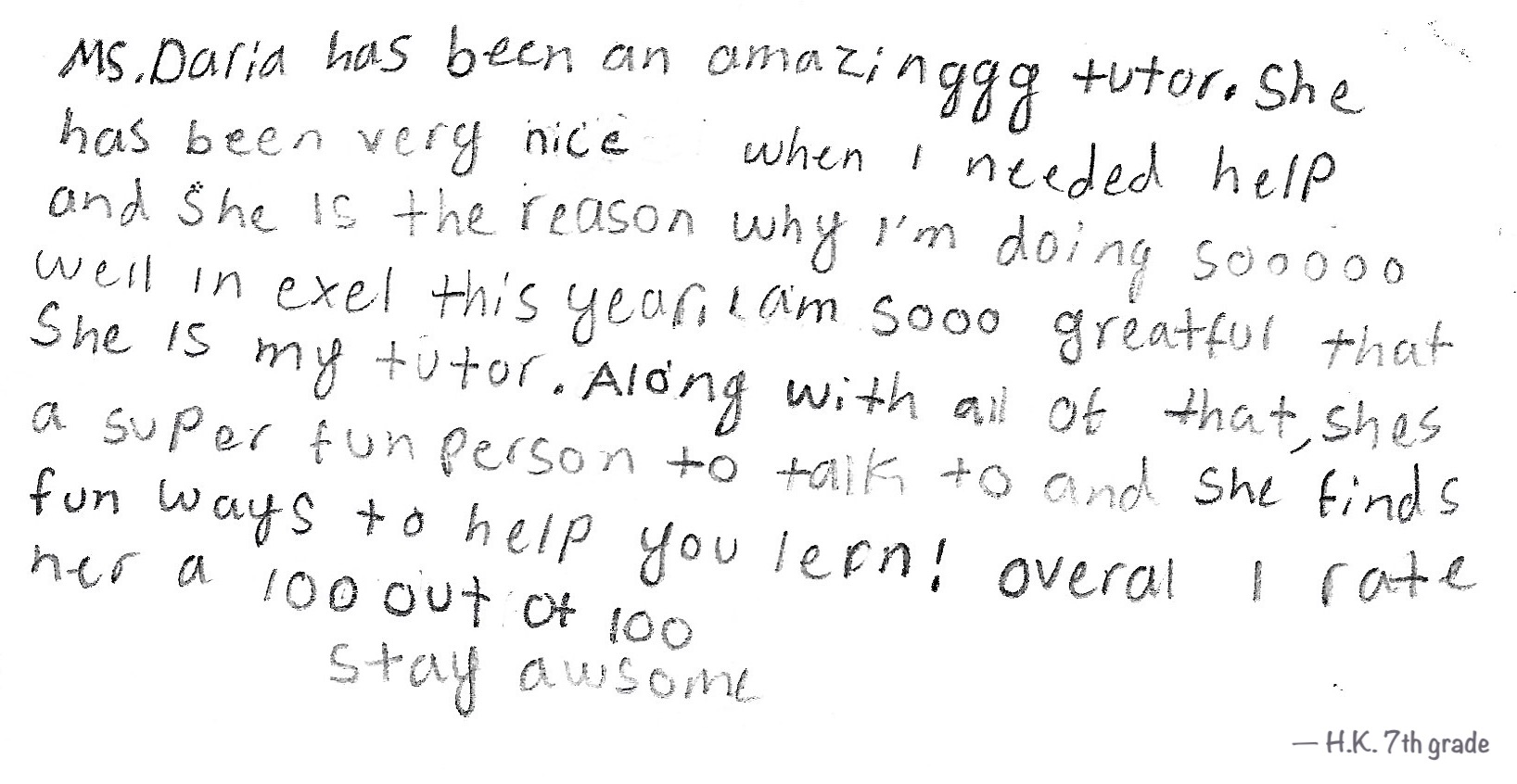
“Ms. Daria has been an amazinggg tutor. She has been very nice when I needed help and she is the reason why I’m doing sooooo well in excel this year. I am sooo grateful that she is my tutor. Along with all of that, she’s a super fun person to talk to and she finds fun ways to help you learn! Overall I rate her a 100 out of 100. Stay awesome.”
— Sophia
↓
Read Sophia’s storyWhere she was
Sophia came to me with a clear goal and the drive to match it. She had just finished 6th grade and wanted to accelerate through 7th grade math and into Algebra 1 — entirely her own initiative. That kind of self-awareness is rare, and I took it seriously.
What I noticed — and what made me stop
After four sessions, something felt off. Sophia was performing beautifully on worksheets — confidently, quickly, correctly. But her scores on assessments covering past material told a different story. I stopped and asked myself two uncomfortable questions: Was I feeding a high-achiever pattern that felt productive but wasn’t building anything durable? Were we accumulating a nice stack of completed worksheets without addressing the real cause of the long-term assessment gap?
The strategy shift
I went back to Sophia and had an honest conversation. Instead of practicing until consistently scoring high on worksheets, I would stop the moment she demonstrated confident understanding, mark the date, and return to test her on that concept two weeks later — no review in between. The goal was to force her brain to hold information over time, not just retrieve it in the moment. Mindfulness over volume. Long-term memory over short-term dopamine from high scores.
The result
On her spring NWEA diagnostic, Sophia scored 251 — placing her in the highly advanced range and the 93rd percentile nationally, against a norm of 224–243. She got into Algebra 1 and felt genuinely excited about reaching what she’d set out for. What matters more to me than any score is the growth in confidence and the fact that she now has results that open doors to exciting academic opportunities ahead.
NWEA 251 · 93rd percentile nationally
Gap closure · Year-long growth
Abigail
5th grade — nearly a full school year
“If you’re looking for an amazing math tutor, I highly recommend Daria, whose passion for teaching and positive energy make every math session engaging and fun. She quickly identified and filled the gaps in my daughter’s learning, helping her gain confidence and get right on track for fifth grade and beyond. Her dedication and joyful approach have truly made a lasting difference in my daughter’s progress and love for math.”
— Abigail’s mother
↓
Read Abigail’s storyWhere she was
Abigail came to me with a diagnostic that revealed significant gaps from 4th grade — enough that catching up would require consistent, sustained work across most of the school year. The goal was clear: bring her up to speed without burning her out in the process. Young students can be wonderfully willing — eager to please, happy to take on whatever you give them. But that willingness can quietly come at a cost to their wellbeing, one that’s hard to measure when the feedback at home and at school is positive.
The approach
I built Abigail a custom planner — simple enough for a 5th grader to use independently, but structured enough for measurable, trackable progress. Every month we planned together. I showed her exactly where she stood, where it would be good for her to be in three months, in six, in a year, and what needed to happen to get there. I wanted her to feel safe — to know I had taken on the responsibility of the plan and the outcomes. What I needed from her was participation, willingness, and openness.
We set challenges, tracked progress on simple sheets, and celebrated milestones with small rewards. Custom worksheets, math challenges, game-based and sensory activities — all designed to build positive associations with math and the kind of deep mental work that feels empowering when it starts to click.
What I was watching for
One of my core goals was to help separate academic achievement from self-esteem. When effort doesn’t immediately show in scores, discouragement is natural. So we built in honest monthly reviews. When we fell short of a goal — and sometimes we did — we talked about it openly. Those conversations were as valuable as any worksheet.
The result
From fall to spring, Abigail gained 28 scale score points on her I-Ready diagnostic, placing her at the 80th national percentile. That number represents a lot of small challenges met and a few goals adjusted — and a student who finished the year genuinely more confident in herself as a learner.
+28 I-Ready points · 80th percentile nationally
Engagement · Project-based learning
Oliver
Going into 8th grade
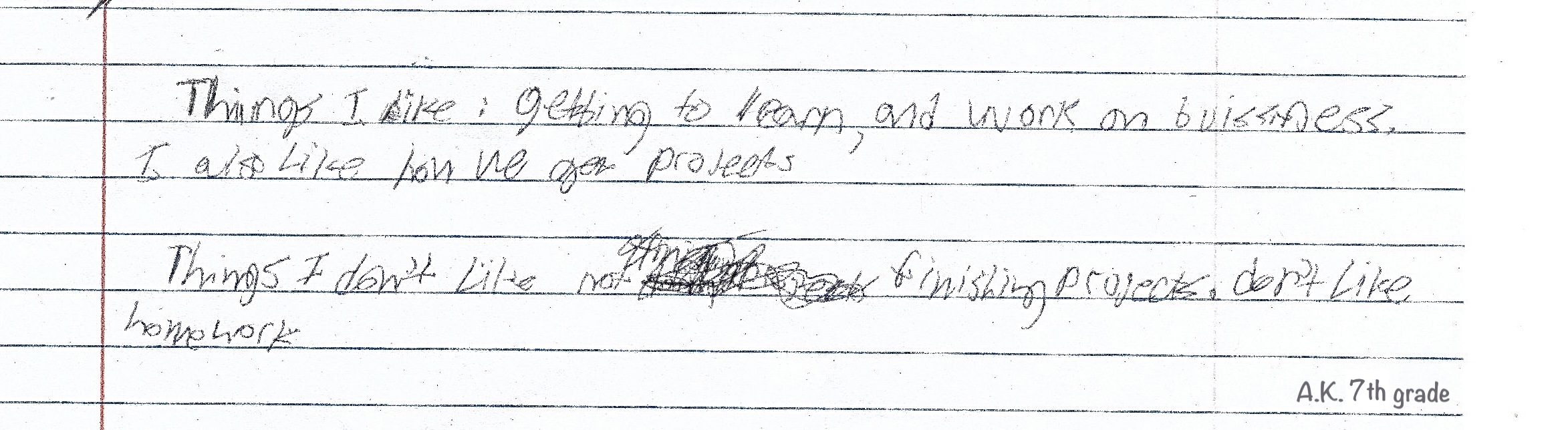
“Things I like: getting to learn, and working on business. I also like how we do projects. Things I don’t like: not finishing projects. Don’t like homework.”
— Oliver
↓
Read Oliver’s storyWhere he was
At first glance, the easy explanation for Oliver would have been: just not a math person. Math was hard to engage with, hard to sit through, hard to retain. Worksheets went unfinished. Topics didn’t stick. But sit down with this student for a couple of sessions and a very different picture emerges — bright, motivated, ambitious, and someone who genuinely loves math when it counts, when it’s meaningful.
The problem wasn’t ability. It was relevance.
What we worked on
I scrapped the traditional worksheet approach and handed Oliver something most students never get in a tutoring session: a choice. We used project-based learning where the theme — the real-world scenario — was his to pick. We planned a dream road trip up the Pacific Coast. We explored deserts and rainforests. We built a jeans business from the ground up. All while quietly mastering fractions, decimals, ratios, and everything in between.
Oliver had a genuine passion for self-improvement, especially through sports. So I reframed the sessions entirely. We weren’t doing math drills — we were training. The brain is a muscle, and we were at the mental gym. Heavy lifting to build strength, rest periods built in, compound movements for maximum engagement, timed drills for speed. Structure met creativity, and something clicked.
The turning point
The first time Oliver got genuinely excited about a problem — not because I made it fun, but because he wanted to figure it out — was the shift. He had ownership. The math was serving something he cared about.
The result
An engaged, cooperative student who looked forward to sessions and finished the summer with solid command of the concepts he’d been avoiding for years. On the road to mastering fractions, Oliver also learned something about business, finance, the world, and himself.
In their own words ✏️
Notes from students — exactly as they wrote them
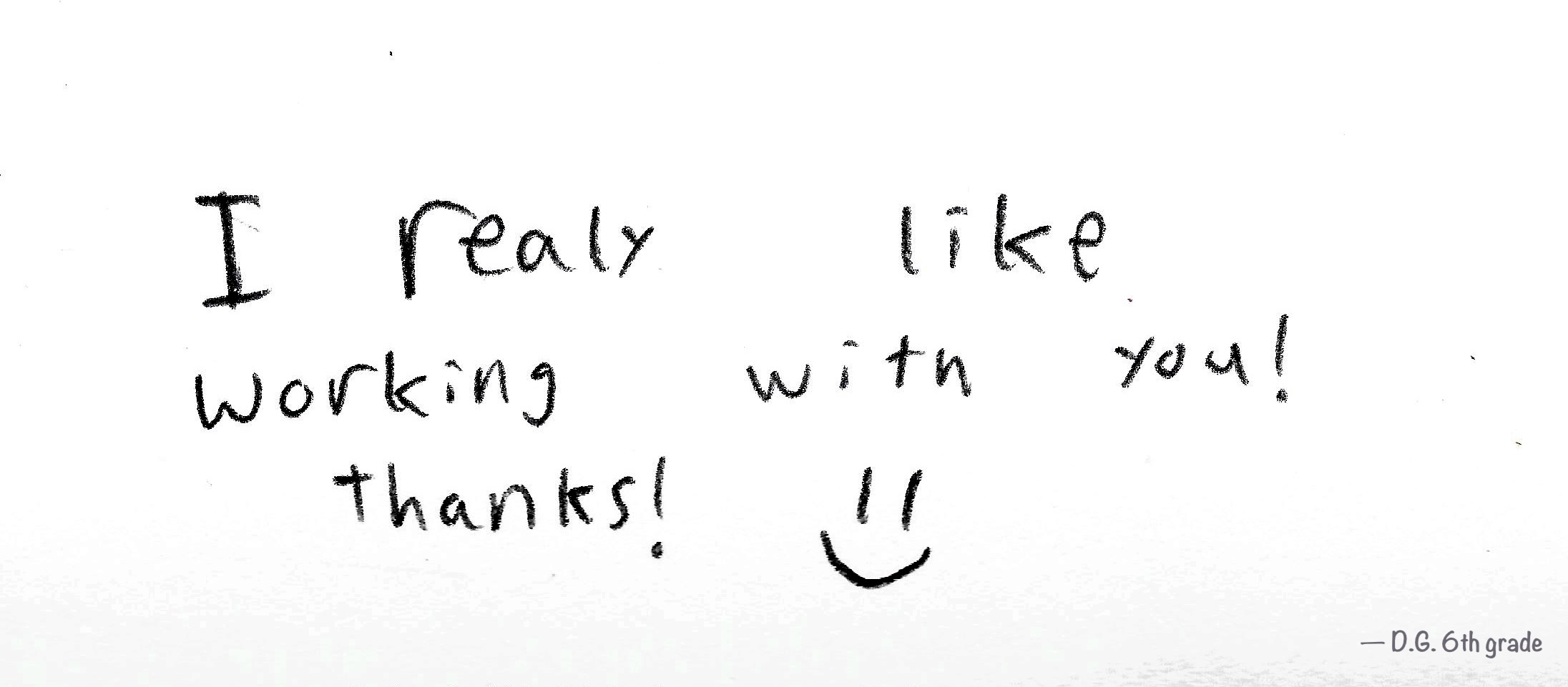
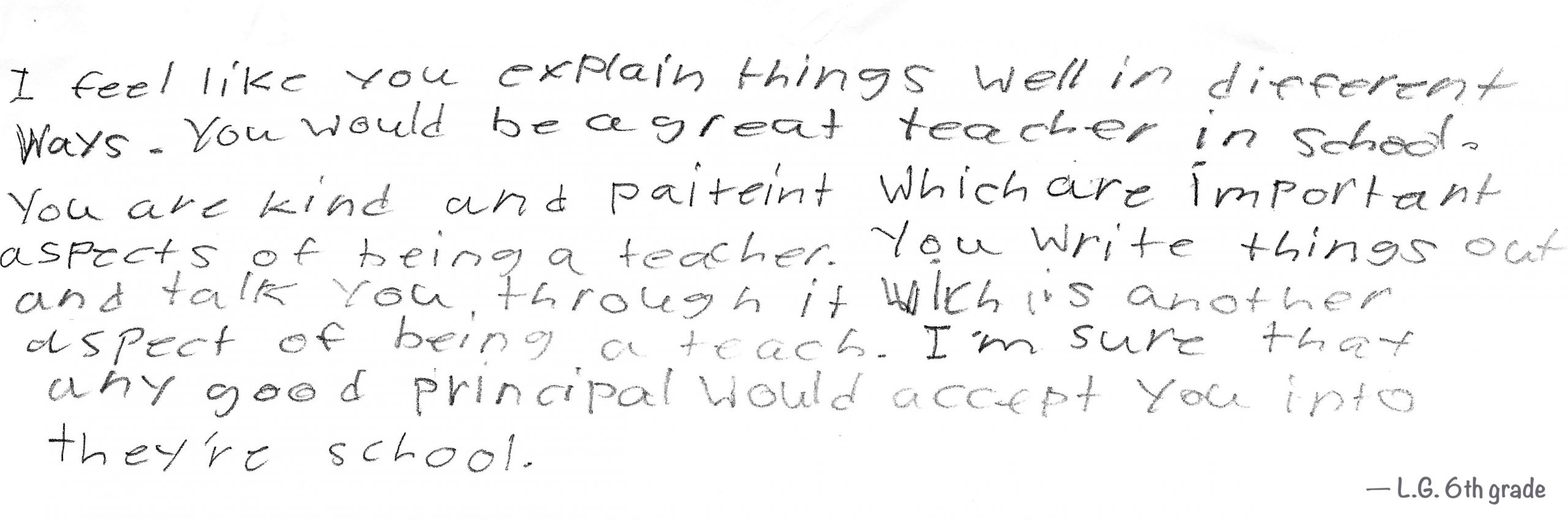



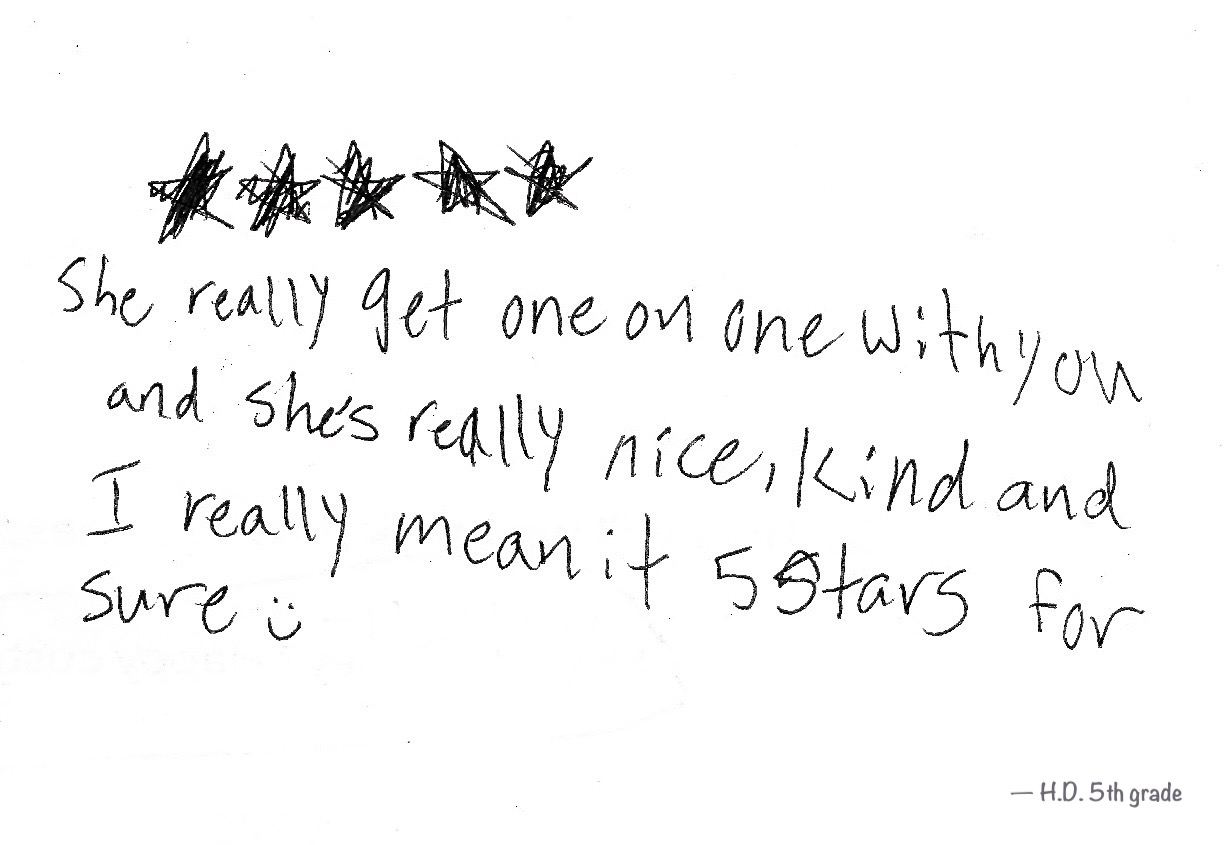
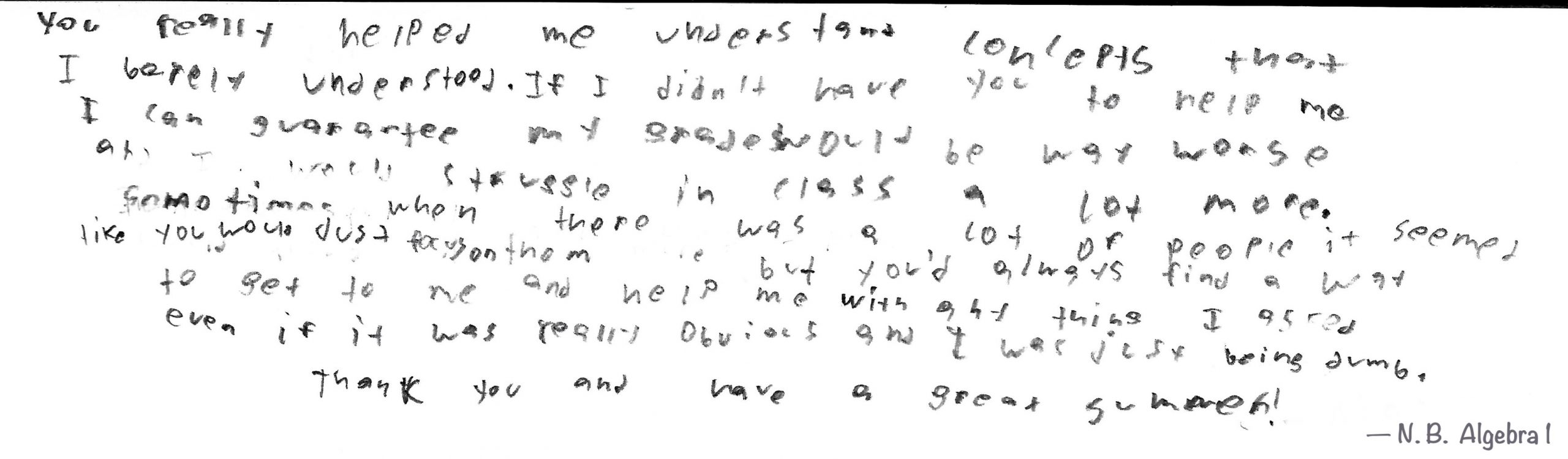


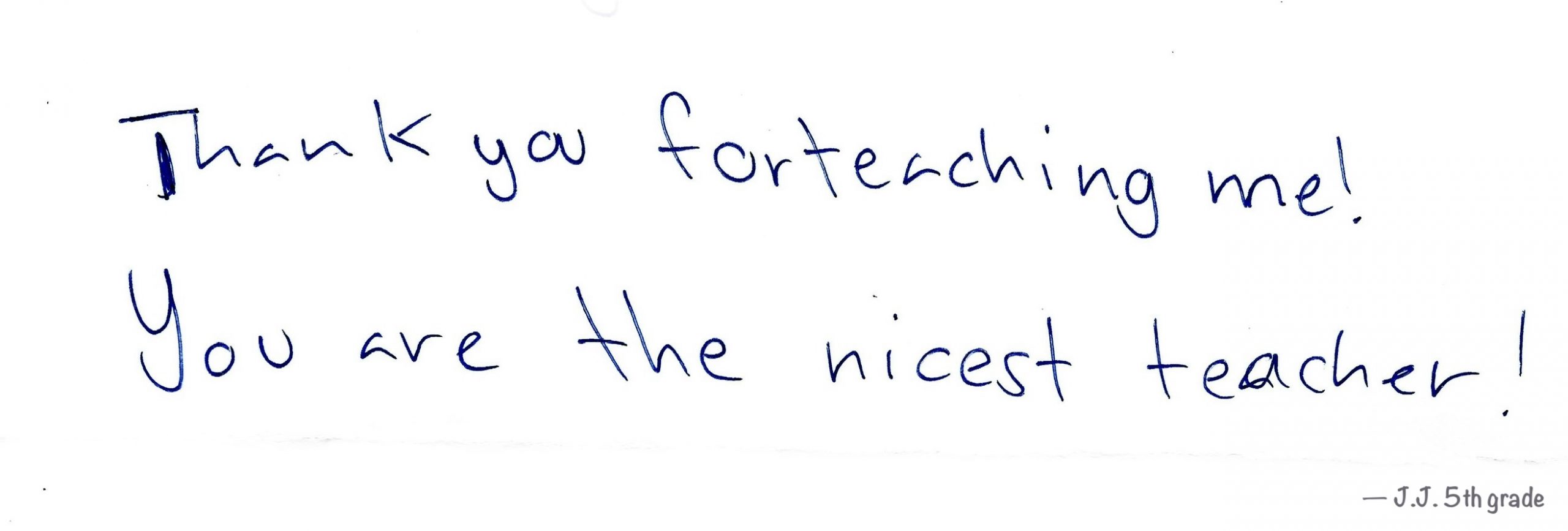
Handwritten notes — a little unfiltered, completely real.
Ready to start your own story?
Every child is different. Every session is built around the individual — their pace, their thinking style, their goals. If something in these stories resonated with you, I’d love to connect.